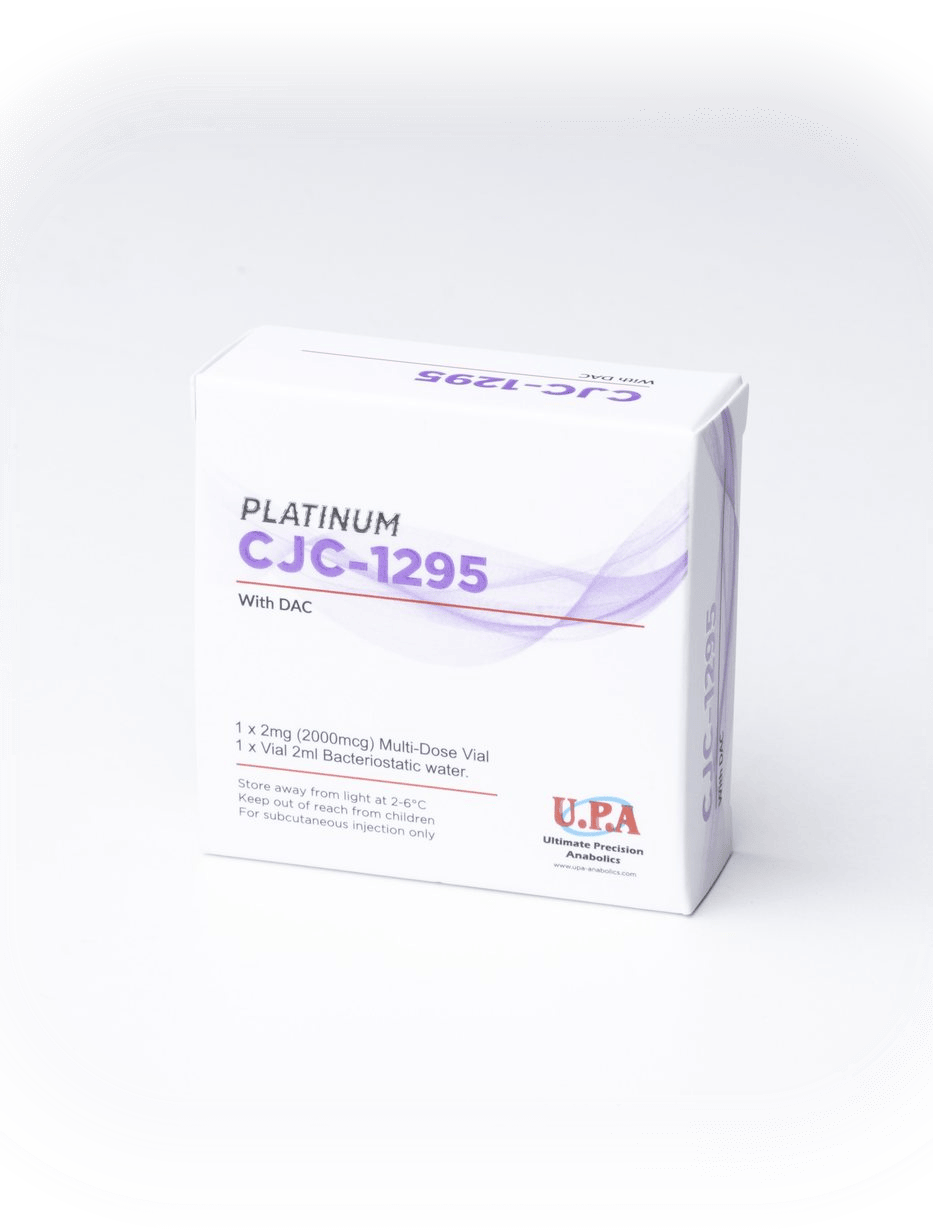
Hormone & Growth
CJC-1295
GHRH Analogue — Pulsatile Growth Hormone Release
| Supplier | Form | Pack | Price | |
|---|---|---|---|---|
| UPA | Vial | — | R350 | Order → |
CJC-1295 without DAC — often labelled Mod GRF 1-29 — is a synthetic analogue of growth hormone-releasing hormone (GHRH). It binds the same pituitary receptor as the body's natural GHRH, prompting the pituitary to release a pulse of growth hormone. Without the DAC (Drug Affinity Complex) modification, it has a short half-life of around 30 minutes, closely mimicking the body's natural, pulsatile GH release pattern rather than producing a sustained elevation.
It's most often paired with a ghrelin-mimetic like Ipamorelin, since the two act on separate receptors and produce a substantially larger GH pulse together than either compound alone.
| Route | Subcutaneous injection |
|---|---|
| Frequency | 1–3 times daily, typically before bed and/or fasted, due to its short half-life |
| Duration | 8–12 week cycles are common, often followed by a break |
| Typical stack | Frequently combined with Ipamorelin for a synergistic GH pulse |
CJC-1295 is supplied for laboratory and research purposes. Any human use should be guided and supervised by a qualified practitioner.
Mild flushing, headache, or lightheadedness shortly after injection is the most commonly reported effect, tied to the sudden GH/GHRH pulse. Injection site redness is also common. Long-term GH-axis stimulation should be monitored by a practitioner, particularly for anyone with a history of insulin resistance.
Repeated stimulation of the growth hormone axis should be practitioner-supervised, with attention to blood glucose and IGF-1 levels over extended use. This sheet is for informational purposes only and does not constitute medical advice.