Sexual Health
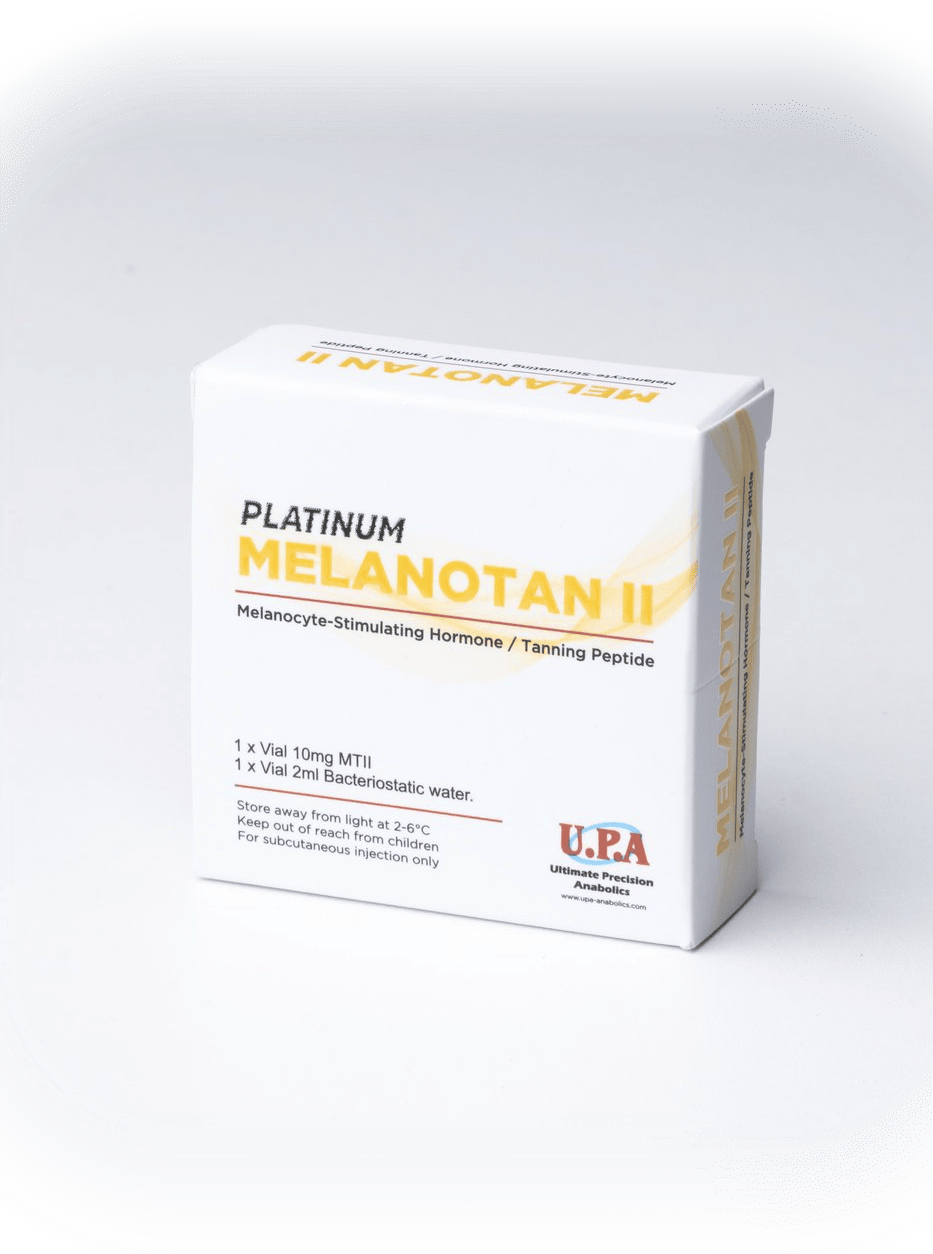
Melanotan II
Melanocortin Agonist — Libido, Appetite & Pigmentation Research
| Supplier | Form | Pack | Price | |
|---|---|---|---|---|
| UPA | Vial | — | R300 | Order → |
Melanotan II is a synthetic analogue of alpha-melanocyte-stimulating hormone (α-MSH) that activates melanocortin receptors throughout the body. It's best known as the parent compound from which PT-141 (Bremelanotide) was derived — where PT-141 was refined specifically for sexual response with fewer pigmentation effects, Melanotan II retains the fuller, less selective melanocortin activity, including its well-known skin-tanning effect.
Because it activates melanocortin receptors broadly rather than selectively, Melanotan II is studied and used for a wider, less predictable range of effects than PT-141 — including libido, appetite suppression, and skin pigmentation — with a correspondingly wider side-effect profile.
| Route | Subcutaneous injection |
|---|---|
| Frequency | Practitioner-set, typically starting at a very low dose to gauge sensitivity |
| Duration | Titrated gradually; “loading” and “maintenance” dosing approaches are both used anecdotally |
| Human trial status | Not FDA-approved for any indication; PT-141 (its more selective derivative) is the version that reached approval, for sexual response specifically |
Melanotan II is supplied for laboratory and research purposes. Any human use should be guided and supervised by a qualified practitioner.
Nausea and flushing are common, especially when starting or increasing dose. Unwanted pigmentation changes (including in moles) and appetite suppression are expected effects rather than side effects, given how the compound works, which is exactly why more selective derivatives like PT-141 were developed.
Melanotan II's non-selective melanocortin activity means its effects — and side effects — are harder to predict than PT-141's. Anyone with a personal or family history of melanoma or atypical moles should avoid it. This sheet is for informational purposes only and does not constitute medical advice.