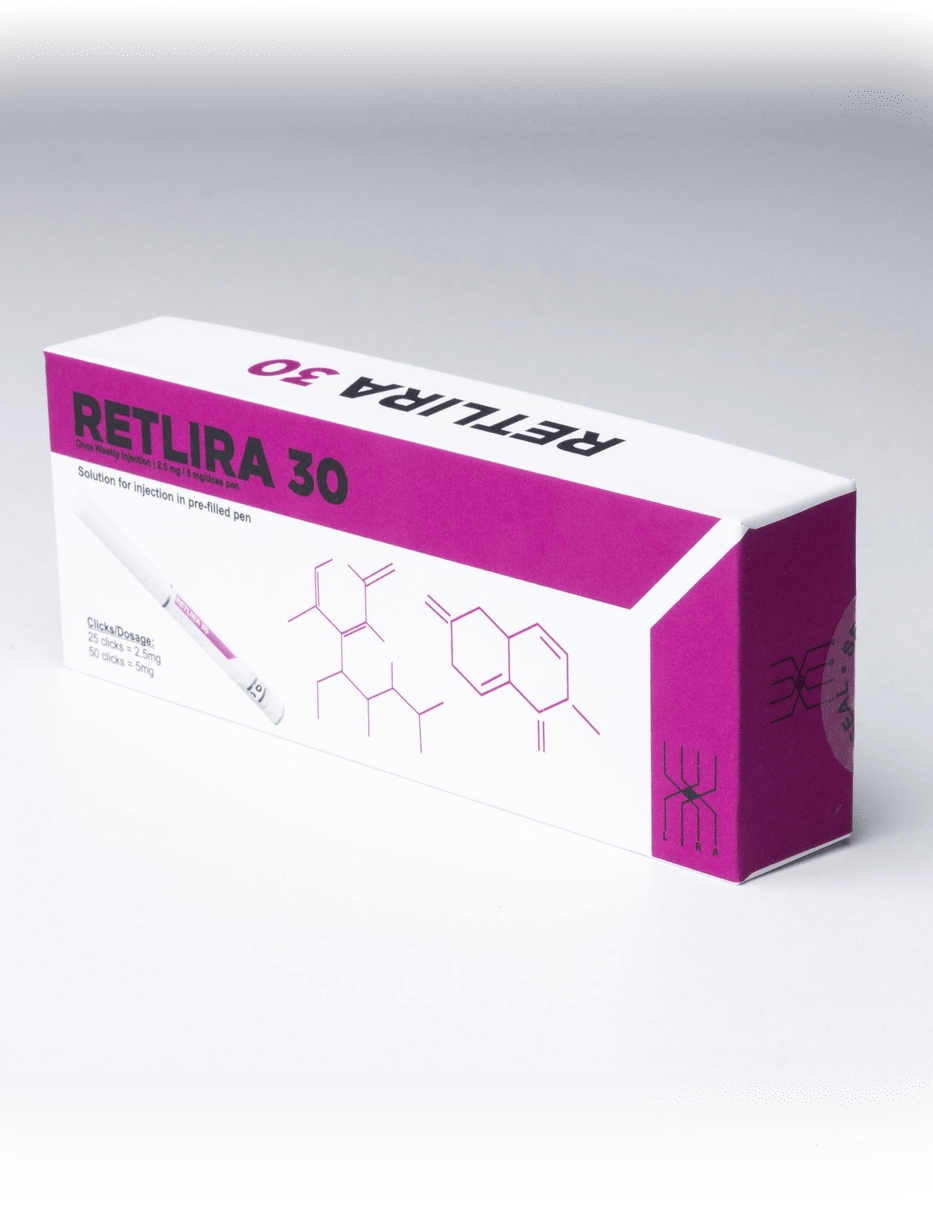
Retatrutide is an investigational peptide that activates three metabolic hormone receptors at once — GLP-1, GIP, and glucagon — rather than the single or dual pathways used by earlier compounds. This broader action is what sets it apart: alongside its well-known effect on appetite and weight, the added glucagon pathway drives a distinct and clinically significant improvement in cholesterol and lipid handling.
Also reduced dangerous small-dense LDL particles and increased protective HDL particle size. Effects were substantially stronger than tirzepatide or semaglutide, the related GLP-1 family peptides.
| Route | Subcutaneous injection |
|---|---|
| Frequency | Once weekly |
| Titration | Started low and increased gradually over several weeks, per practitioner-guided protocol |
| Duration | Trial data reported through 48 weeks; longer-term use is practitioner-determined |
Carries the gastrointestinal side effects common to GLP-1/GIP/glucagon agonists — nausea, reduced appetite, and occasional digestive upset, typically most noticeable during dose increases and easing with time. Not recommended for anyone with a personal or family history of medullary thyroid carcinoma, MEN2, or significant pancreatic disease.
Retatrutide is investigational and its cholesterol benefit is not yet an approved indication. Use should be guided by a qualified practitioner, with appropriate monitoring — particularly for anyone managing an existing cardiovascular or cholesterol condition. This is not a substitute for medical advice.